Can butt weld elbows be used in nuclear power plant pipelines?

As a supplier of butt weld elbows, this is a question I often encounter from clients, especially those in the energy - related industries. Nuclear power plants are among the most critical and safety - conscious facilities in the world. The pipelines in these plants play a pivotal role in transporting various fluids, including coolant, steam, and other substances necessary for the operation of the nuclear reactor. Therefore, the selection of pipeline components such as butt weld elbows is of utmost importance.
Technical Requirements in Nuclear Power Plant Pipelines
Nuclear power plant pipelines are subject to extremely strict technical requirements. They must be able to withstand high pressures, high temperatures, and radiation. The materials used in these pipelines need to have excellent corrosion resistance, mechanical properties, and dimensional stability. Any failure in the pipeline system can lead to catastrophic consequences, including nuclear leakage, which is a threat to public safety and the environment.
Characteristics of Butt Weld Elbows
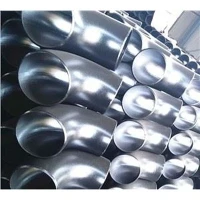
Butt weld elbows are a type of pipe fitting that are widely used in many industrial applications. They are designed to change the direction of the pipeline flow. The main advantage of butt weld elbows is their strong connection. By welding the elbow to the pipeline, a seamless and robust joint is created, which can effectively prevent leakage.

There are different types of butt weld elbows, such as Carbon Steel 90LR Seamless Elbow. These elbows are made of carbon steel, which is known for its good strength and relatively low cost. Carbon steel can be heat - treated to improve its mechanical properties, making it suitable for high - pressure and high - temperature applications. Another type is the Carbon Steel Pipe Fitting, which includes butt weld elbows as well as other fittings like tees and reducers. The 90 Degree Lr Elbow is a common configuration, which can smoothly change the flow direction by 90 degrees, reducing the impact on the pipeline system.
Suitability for Nuclear Power Plant Pipelines
- Material Compatibility
- For nuclear power plant pipelines, the material of the butt weld elbows must be carefully selected. Some common materials used in nuclear applications are stainless steel and nickel - based alloys. These materials have excellent corrosion resistance and can withstand radiation. However, carbon steel butt weld elbows can also be used in some non - critical parts of the nuclear power plant pipelines, such as the secondary coolant systems or some low - radiation areas. In these areas, carbon steel's cost - effectiveness and good mechanical properties make it a viable option.
- Weld Quality
- Welding is a critical process in the installation of butt weld elbows in nuclear power plant pipelines. The welds must meet strict quality standards. Non - destructive testing methods, such as ultrasonic testing, radiographic testing, and magnetic particle testing, are commonly used to ensure the integrity of the welds. Any defects in the welds can lead to potential failure points in the pipeline system. As a supplier, we ensure that our butt weld elbows are welded by highly skilled welders and undergo rigorous quality control procedures.
- Dimensional Accuracy
- In nuclear power plant pipelines, dimensional accuracy is crucial. The butt weld elbows must fit precisely into the pipeline system to ensure proper flow and minimize stress concentrations. Our manufacturing process uses advanced machining and forming techniques to ensure that the dimensions of the butt weld elbows meet the strict requirements of nuclear power plant projects.
Regulatory and Safety Considerations
Nuclear power plants are highly regulated facilities. There are numerous national and international standards and regulations that govern the design, construction, and operation of nuclear power plant pipelines. For example, the American Society of Mechanical Engineers (ASME) Boiler and Pressure Vessel Code provides detailed requirements for the materials, design, fabrication, and inspection of pipeline components. As a supplier, we are well - versed in these regulations and ensure that our butt weld elbows comply with all relevant standards.
Safety is the top priority in nuclear power plants. Before any pipeline component, including butt weld elbows, can be used in a nuclear power plant, it must undergo extensive testing and certification. This includes testing for radiation resistance, long - term stability under high - pressure and high - temperature conditions, and compatibility with other pipeline materials.

Case Studies
There have been successful cases of using butt weld elbows in nuclear power plant pipelines. In some older nuclear power plants, carbon steel butt weld elbows were used in the secondary systems. These elbows have been in service for decades, demonstrating their reliability under the specific operating conditions of the plant. However, in newer nuclear power plants, more advanced materials and designs are often used to meet the increasing safety and performance requirements.
Conclusion
In conclusion, butt weld elbows can be used in nuclear power plant pipelines, but it depends on various factors such as the specific location in the pipeline system, the material requirements, and the regulatory and safety standards. As a supplier of butt weld elbows, we are committed to providing high - quality products that meet the strict requirements of nuclear power plant projects.
If you are interested in purchasing butt weld elbows for your nuclear power plant project or other industrial applications, we welcome you to contact us for further discussions and procurement negotiations. Our team of experts is ready to provide you with detailed product information and technical support.
References
- American Society of Mechanical Engineers (ASME) Boiler and Pressure Vessel Code.
- International Atomic Energy Agency (IAEA) safety standards for nuclear power plants.
- Industry reports on the use of pipeline components in nuclear power plants.