How to Ensure Good Welding Quality for Steel Reducers?
As a long - standing steel reducer supplier, I understand the pivotal role that welding quality plays in the performance and reliability of steel reducers. Welding is not merely a joining process; it is a critical step that can significantly impact the structural integrity, corrosion resistance, and overall functionality of steel reducers. In this blog, I will share some key insights and best practices to ensure good welding quality for steel reducers.


1. Material Selection and Preparation
- Proper Material Grades: The first step in ensuring good welding quality is to select the appropriate steel grade for the reducer. Different applications may require different steel grades with varying levels of strength, corrosion resistance, and weldability. For instance, if the steel reducer is to be used in a corrosive environment, a stainless steel grade with high chromium and nickel content, such as 304 or 316, may be more suitable. As a supplier, we offer a wide range of steel grades for our Butt Welded Steel Reducer, ensuring that customers can choose the most appropriate material for their specific needs.
- Material Cleaning and Inspection: Before welding, the steel reducer surfaces must be thoroughly cleaned to remove any dirt, rust, oil, or other contaminants. These contaminants can prevent proper fusion during welding and lead to defects such as porosity, cracks, or lack of fusion. Inspection of the materials is also crucial. Any visible defects, such as cracks or inclusions in the steel, should be addressed before welding. This can be achieved through non - destructive testing methods, such as ultrasonic testing or magnetic particle testing.
2. Welding Process Selection
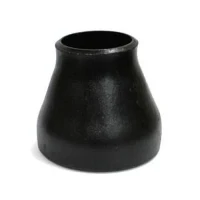
- Matching the Process to the Application: There are several welding processes available for welding steel reducers, including shielded metal arc welding (SMAW), gas metal arc welding (GMAW), gas tungsten arc welding (GTAW), and submerged arc welding (SAW). Each process has its own advantages and limitations. For example, SMAW is a versatile process that can be used in various positions and is suitable for small - to - medium - scale welding operations. On the other hand, GMAW is a high - speed process that offers good productivity, making it ideal for large - scale production. As a supplier, we work closely with our customers to recommend the most suitable welding process based on the specific application requirements of our Carbon Steel Pipe Fitting Reducer.
- Welding Parameters Optimization: Once the welding process is selected, it is essential to optimize the welding parameters. These parameters include welding current, voltage, welding speed, and shielding gas flow rate. Incorrect welding parameters can result in poor weld quality, such as excessive spatter, undercutting, or incomplete penetration. For example, if the welding current is too high, it can cause the weld to overheat, leading to distortion and reduced mechanical properties. Therefore, it is necessary to conduct test welds and adjust the parameters according to the welding procedure specification (WPS).
3. Welding Procedure Specification (WPS)
- Developing a Robust WPS: A WPS is a detailed document that outlines the specific welding process, materials, parameters, and procedures to be followed during welding. It serves as a guide to ensure consistent and high - quality welds. As a supplier, we assist our customers in developing a WPS that is compliant with relevant industry standards, such as ASME Boiler and Pressure Vessel Code or ASTM standards. The WPS should be based on the results of welding procedure qualification tests (PQT), which verify that the proposed welding process can produce welds with the required mechanical properties.
- Training and Certification: Welders who perform the welding on steel reducers must be trained and certified to follow the WPS. Proper training ensures that welders have the necessary skills and knowledge to operate the welding equipment correctly and perform the welds according to the specified parameters. Certification programs, such as those offered by the American Welding Society (AWS), demonstrate the welders' competence and adherence to industry - recognized standards.
4. Post - Weld Treatment
- Stress Relieving: After welding, steel reducers may experience residual stresses due to the non - uniform heating and cooling during the welding process. These residual stresses can lead to cracking and reduced fatigue life. Stress relieving is a heat treatment process that involves heating the welded part to a specific temperature and holding it for a certain period of time to reduce the residual stresses. This process can improve the dimensional stability and mechanical properties of the steel reducer.
- Weld Inspection and Testing: Post - weld inspection and testing are essential to ensure the quality of the welds. Non - destructive testing methods, such as visual inspection, ultrasonic testing, radiographic testing, and dye penetrant testing, can be used to detect surface and internal defects in the welds. In addition, destructive testing methods, such as tensile testing, bend testing, and hardness testing, can be performed to evaluate the mechanical properties of the welds. Any defective welds should be repaired or removed and re - welded according to the approved procedures.
5. Quality Control and Assurance
- Establishing a Quality Management System: A comprehensive quality management system (QMS) is crucial for ensuring good welding quality for steel reducers. The QMS should include procedures for material control, welding process control, inspection and testing, and corrective and preventive actions. It should also define the roles and responsibilities of all personnel involved in the welding process. As a supplier, we have implemented a strict QMS to ensure that all our ANSI B16.9 Carbon Steel Tee and other steel reducers meet the highest quality standards.
- Continuous Improvement: Quality control and assurance are not one - time activities but an ongoing process. Regular audits and reviews of the QMS should be conducted to identify areas for improvement. Feedback from customers, welders, and inspection personnel should be collected and analyzed to make necessary adjustments to the welding process, procedures, and quality control measures.
In conclusion, ensuring good welding quality for steel reducers requires a comprehensive approach that encompasses material selection and preparation, welding process selection, development of a robust welding procedure specification, post - weld treatment, and quality control and assurance. By following these best practices, we can produce steel reducers with high - quality welds that meet the demanding requirements of various industries.
If you are looking for high - quality steel reducers or need professional advice on welding quality, please feel free to contact us for further discussion and procurement. We are committed to providing you with the best products and services.
References
- ASME Boiler and Pressure Vessel Code
- ASTM Standards
- American Welding Society (AWS) Documents