Hey there! As a steel flange supplier, I've dealt with all sorts of questions about how to connect steel flanges to pipes. It's a topic that comes up a lot, and for good reason. Getting the connection right is crucial for the safety and efficiency of any piping system. So, let's dive into the different connection methods and what you need to know about each one.
Welded Connections
Welded connections are one of the most common ways to attach a steel flange to a pipe. There are two main types of welded connections: butt welding and socket welding.
Butt Welding
Butt welding is a popular choice for high-pressure and high-temperature applications. In this method, the pipe and the flange are aligned end-to-end, and a continuous weld is made around the circumference of the joint. This creates a strong, leak-proof connection that can withstand extreme conditions.
The process of butt welding involves several steps. First, the ends of the pipe and the flange are beveled to create a V-shaped groove. This groove helps to ensure that the weld penetrates fully into the joint. Next, the pipe and the flange are clamped together to hold them in place. Then, a welding electrode is used to create an arc between the two pieces, melting the metal and fusing them together.
One of the advantages of butt welding is its strength. The continuous weld provides a solid connection that can handle high stress and pressure. It's also a reliable method for preventing leaks, making it ideal for applications where safety is a top priority. However, butt welding requires skilled welders and specialized equipment, which can make it more expensive and time-consuming than other connection methods.
Socket Welding
Socket welding is another type of welded connection that is commonly used for smaller pipes and lower-pressure applications. In socket welding, the pipe is inserted into a socket in the flange, and a fillet weld is made around the outside of the joint. This creates a strong, durable connection that is relatively easy to install.
The process of socket welding is similar to butt welding, but it doesn't require the ends of the pipe to be beveled. Instead, the pipe is simply inserted into the socket in the flange, and a weld is made around the perimeter of the joint. Socket welding is a popular choice for applications where space is limited, as it requires less clearance than butt welding.
One of the advantages of socket welding is its simplicity. It's a relatively easy process that can be performed by less-skilled welders. It's also a cost-effective method for connecting pipes and flanges, as it requires less material and labor than butt welding. However, socket welding may not be suitable for high-pressure or high-temperature applications, as the fillet weld may not be as strong as a butt weld.
Threaded Connections
Threaded connections are another common way to connect a steel flange to a pipe. In this method, the pipe and the flange are threaded, and a threaded coupling is used to join them together. Threaded connections are easy to install and remove, making them a popular choice for applications where frequent disassembly is required.
There are two main types of threaded connections: tapered and straight. Tapered threads are designed to create a tight seal when tightened, while straight threads rely on a gasket or O-ring to prevent leaks. Tapered threads are more commonly used for high-pressure applications, while straight threads are often used for low-pressure applications.
The process of installing a threaded connection involves several steps. First, the threads on the pipe and the flange are cleaned and lubricated to prevent galling. Then, the threaded coupling is screwed onto the pipe, and the flange is threaded onto the coupling. Finally, the coupling is tightened using a wrench to create a tight seal.
One of the advantages of threaded connections is their ease of installation. They can be installed quickly and easily using basic tools, making them a popular choice for DIY projects and small-scale applications. They're also relatively inexpensive, as they don't require specialized equipment or skilled labor. However, threaded connections may not be suitable for high-pressure or high-temperature applications, as the threads may loosen over time and cause leaks.
Slip-On Flanges
Slip-on flanges are a type of flange that is designed to slide over the end of a pipe and be welded in place. They're a popular choice for low-pressure applications, as they're easy to install and relatively inexpensive.
The process of installing a slip-on flange involves several steps. First, the pipe is cut to the appropriate length, and the end is beveled to create a smooth surface for welding. Then, the slip-on flange is slid over the end of the pipe and aligned with the pipe's centerline. Next, a fillet weld is made around the outside of the joint to secure the flange to the pipe.
One of the advantages of slip-on flanges is their ease of installation. They can be installed quickly and easily using basic tools, making them a popular choice for DIY projects and small-scale applications. They're also relatively inexpensive, as they don't require specialized equipment or skilled labor. However, slip-on flanges may not be suitable for high-pressure or high-temperature applications, as the fillet weld may not be as strong as a butt weld.
Choosing the Right Connection Method
When choosing a connection method for your steel flange and pipe, there are several factors to consider. These include the pressure and temperature of the system, the size and type of the pipe and flange, and the frequency of disassembly.
For high-pressure and high-temperature applications, butt welding is usually the best choice. It provides a strong, leak-proof connection that can withstand extreme conditions. For lower-pressure applications, socket welding or threaded connections may be more suitable. These methods are easier to install and remove, making them a good choice for applications where frequent disassembly is required.


If you're not sure which connection method is right for your application, it's always a good idea to consult with a professional. A qualified engineer or technician can help you evaluate your needs and recommend the best connection method for your specific situation.
Our Steel Flange Products
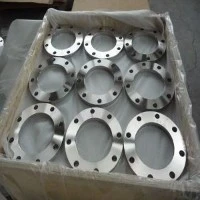
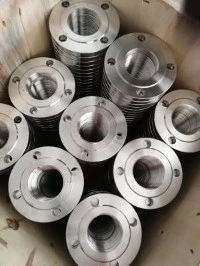
As a steel flange supplier, we offer a wide range of products to meet your needs. Whether you're looking for a DN50 Mild Steel Flange, a SUS304 Stainless Steel Flange, or Carbon Steel Slip On Flanges, we've got you covered.
Our steel flanges are made from high-quality materials and are designed to meet the highest standards of quality and performance. We offer a variety of sizes, shapes, and configurations to ensure that you can find the perfect flange for your application.
If you're interested in learning more about our steel flange products or need help choosing the right connection method for your project, please don't hesitate to contact us. Our team of experts is always available to answer your questions and provide you with the information you need to make an informed decision.
Conclusion
In conclusion, the connection method you choose for your steel flange and pipe will depend on several factors, including the pressure and temperature of the system, the size and type of the pipe and flange, and the frequency of disassembly. Butt welding is usually the best choice for high-pressure and high-temperature applications, while socket welding or threaded connections may be more suitable for lower-pressure applications. Slip-on flanges are a popular choice for low-pressure applications, as they're easy to install and relatively inexpensive.
As a steel flange supplier, we offer a wide range of products to meet your needs. Whether you're looking for a mild steel flange, a stainless steel flange, or a carbon steel slip-on flange, we've got you covered. If you're interested in learning more about our products or need help choosing the right connection method for your project, please don't hesitate to contact us. We're here to help you find the perfect solution for your piping system.
References
- ASME B16.5 - Pipe Flanges and Flanged Fittings
- API 6A - Specification for Wellhead and Christmas Tree Equipment
- ASTM A105 - Standard Specification for Carbon Steel Forgings for Piping Applications
- ASTM A350 - Standard Specification for Carbon and Low Alloy Steel Forgings, Requiring Notch Toughness Testing for Piping Components